Printable knitting & cross stitch graph paper PDF
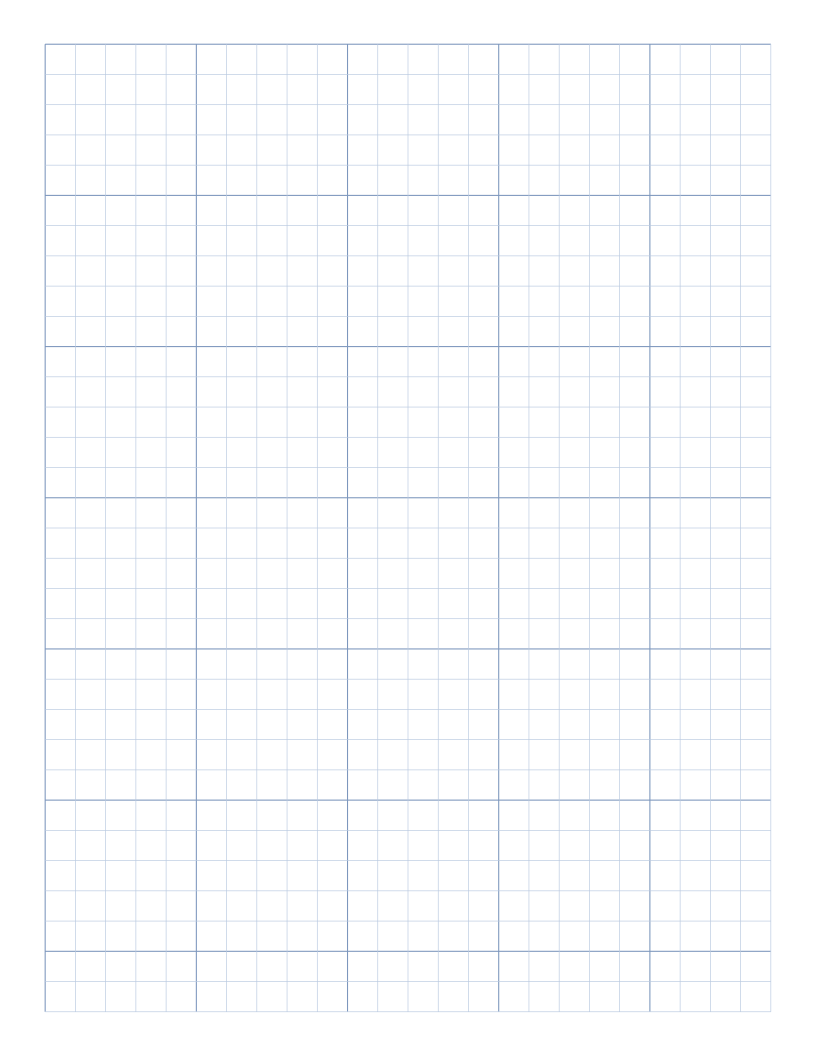
Charts with rectangles that match the shape of a knitted stitch, or squares for cross stitch and pixel crochet. Counts and centre marks help you plan.
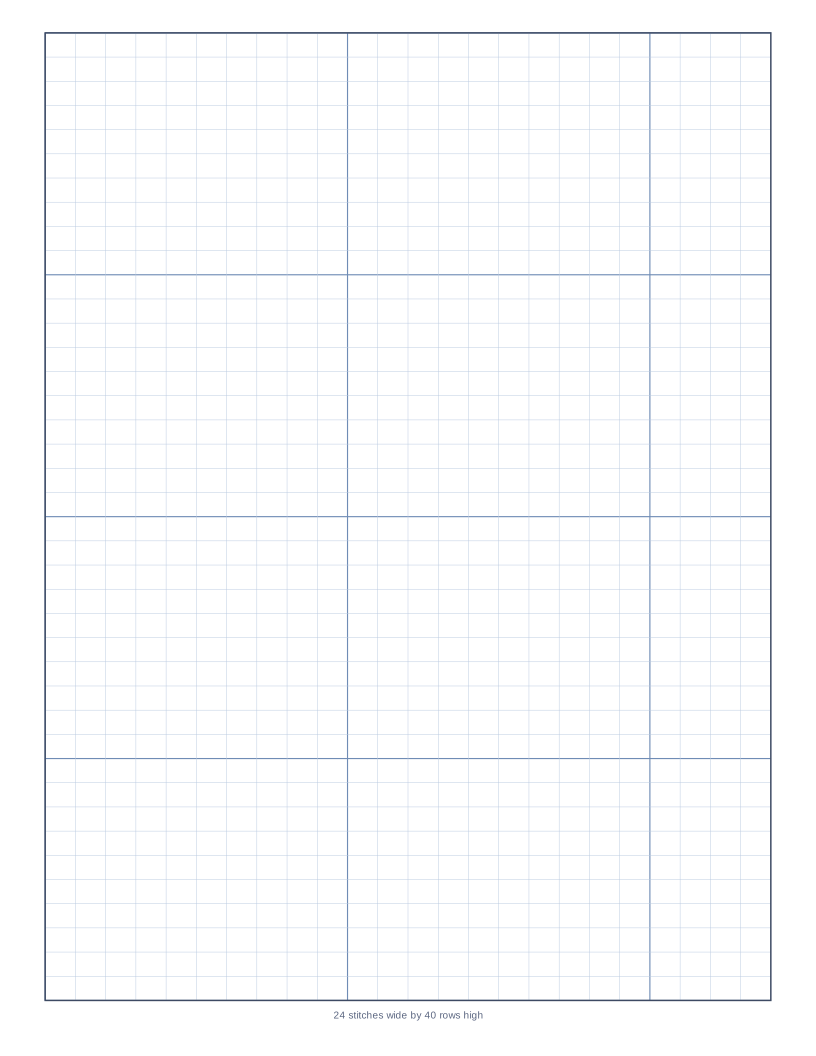
Ready-to-print knitting and cross stitch graph paper PDFs
One-click downloads with the preset settings and a 10 mm margin. They print at actual size.
Popular knitting and cross stitch graph paper downloads
About knitting and cross stitch graph paper
Knitting stitches are wider than they are tall. A typical stocking stitch swatch measures about five stitches for every four rows, so a chart drawn on ordinary square graph paper distorts the design. Knitting graph paper uses rectangles with the same proportions, so a motif drawn on the chart looks the same as the finished fabric.
Cross stitch, tapestry crochet, beadwork and pixel crochet work on square cells instead, so the generator also includes square grids. Whatever the craft, you draw the pattern by colouring cells, then follow it row by row.
To match your gauge, set the stitch width and row height directly in millimetres or inches. Divide the swatch width by the number of stitches, and the swatch height by the number of rows, and enter the results. A stitch and row count is printed under the chart, and optional arrows mark the centre.
What you can use it for
- Colourwork and Fair Isle knitting patterns
- Intarsia and lettering charts
- Cross stitch designs and samplers
- Tapestry and pixel crochet
- Bead weaving, mosaic and loom patterns
The options explained
- Stitch width and height. Set to match your gauge. The 5 by 4 mm preset matches a common worsted weight swatch.
- Heavier line every. Usually 10, so you can count stitches in blocks.
- Mark the centre with arrows. Helps you start a symmetrical design from the middle.
- Print stitch and row count. Prints the size of the chart under the grid, as a number of stitches by a number of rows.
- Outer border. A darker frame around the chart.
Printing tips
- Knit a swatch first and measure it. A chart that matches your real gauge shows how the finished piece will look.
- Use the square presets for cross stitch and pixel crochet, where cells are the same width and height.
- Print several copies and use one for each draft before copying your final pattern.
For more detail, read the guide to printing grid paper at true size.
Frequently asked questions
What ratio is knitting graph paper?
The most common ratio is 5 stitches to 4 rows, which makes each cell wider than it is tall. Your own gauge may differ, and you can change it.
Can I use ordinary graph paper for knitting?
You can, but a motif will look taller and narrower once knitted. Knitting graph paper keeps the proportions.
Is it suitable for cross stitch?
Yes. Use the Cross stitch preset for square cells, with a heavier line and centre marks every 10 cells.
How do I find my gauge?
Knit a swatch, measure its width and height, and divide each by the number of stitches and rows in it.